
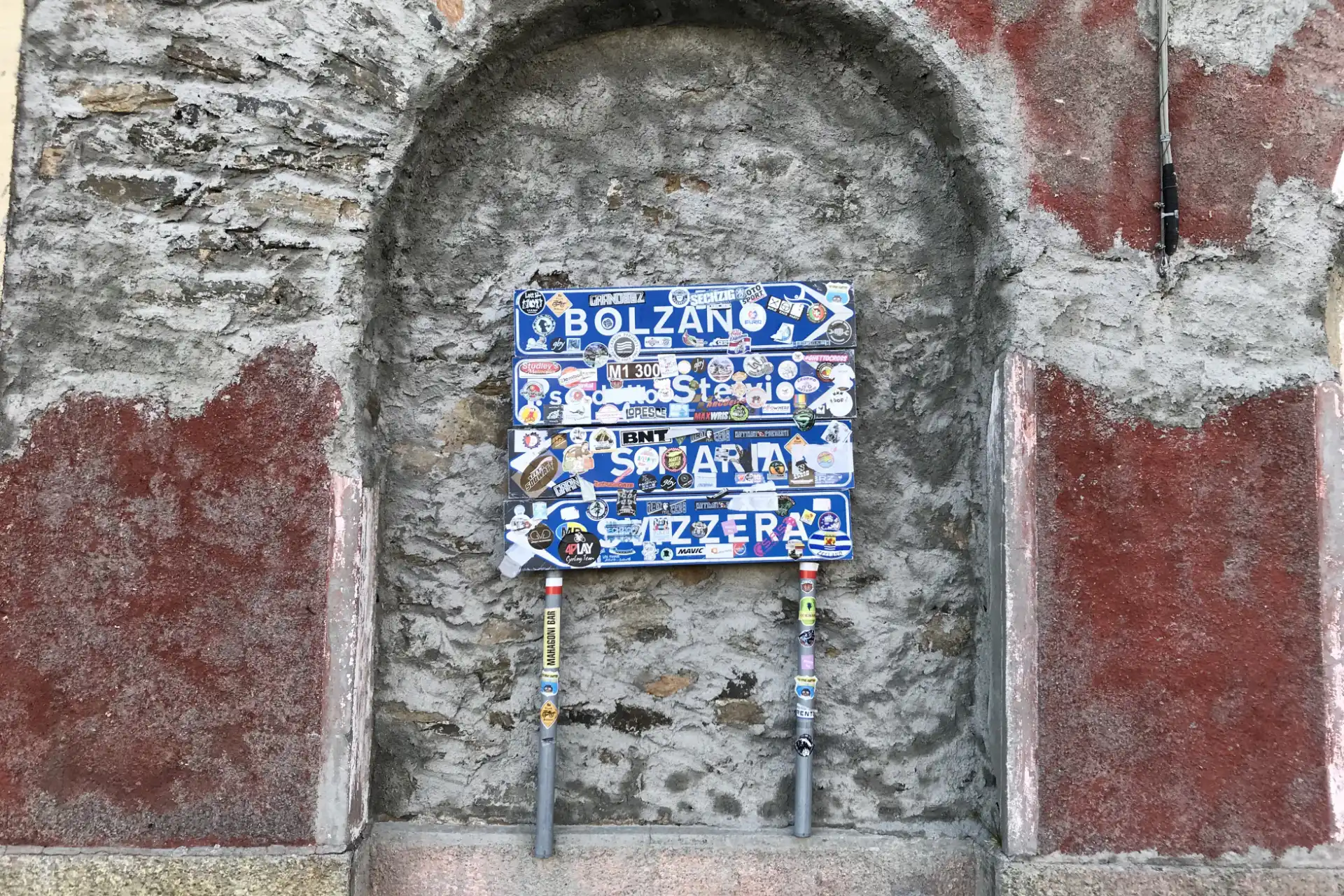
A summit at 2,757 metres. An endless succession of switchbacks. The Stelvio is long, spectacular and unlike anything else in cycling. This is our guide to riding it.
Since Vago Cycling was founded in Bormio, we are lucky enough to call the Stelvio our backyard climb. Over the years, we’ve ridden it hundreds of times with guests from all over the world. Whether you’re a seasoned cyclist, a first-time climber or an e-bike rider, here you’ll find our local tips to help you make the most of your day on Italy’s most iconic climb.
Elevation: 2,757 m (9,045 ft)
Bormio side: 21.5 km · 1,533 m · Avg. 7.1% · 38 hairpins
Prato side: 24.3 km · 1,808 m · Avg. 7.4% · 48 hairpins
Umbrail side: 16.5 km · 1,375 m · Avg. 8.3%
Best season: June to September
Difficulty: ★★★★☆ Long and demanding, never brutally steep
Why is the Stelvio so famous?
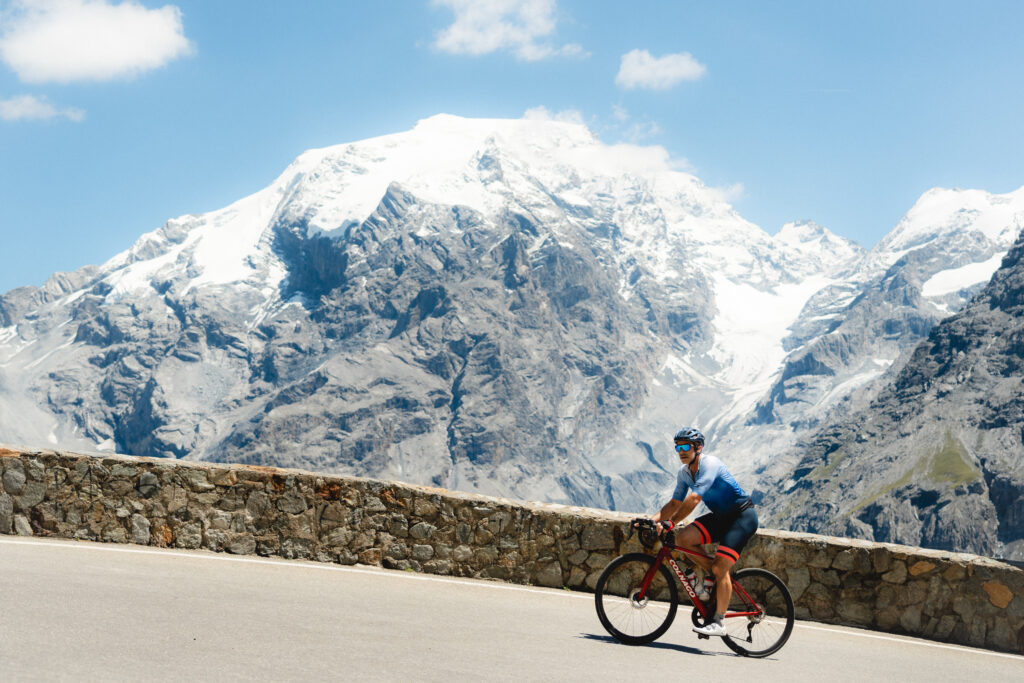
The Stelvio Pass is Italy’s highest paved road and one of the true icons of road cycling.
Its endless switchbacks, high-altitude scenery and long history with the Giro d’Italia have made it one of those climbs that almost every cyclist dreams of conquering.
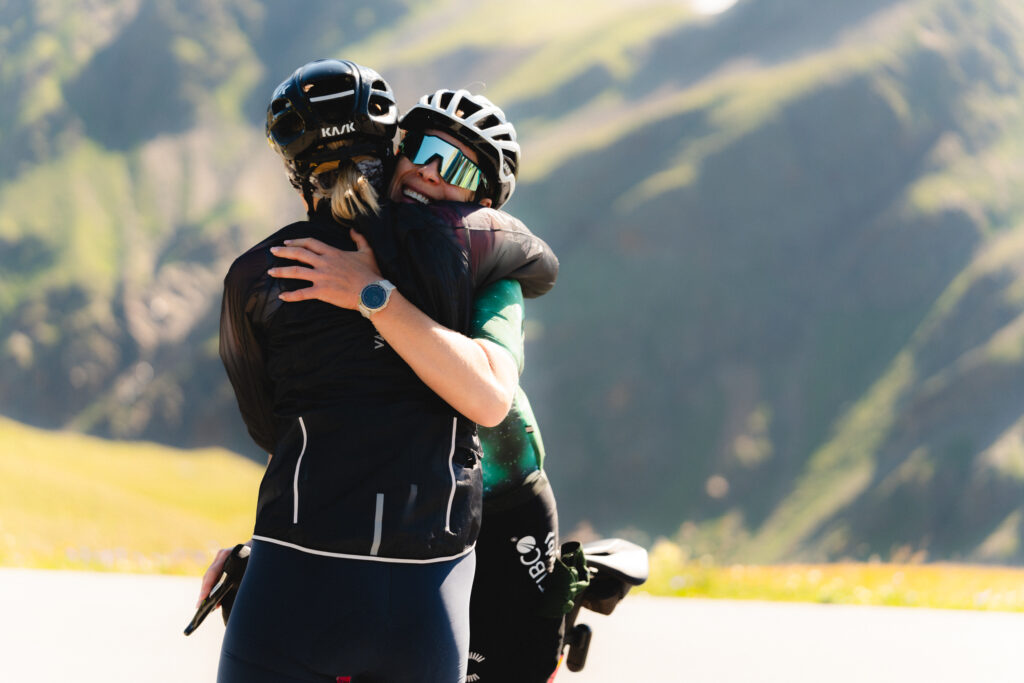
Growing up in the shadow of this giant, sometimes we take it for granted. But seeing the pure joy on the faces of riders from all over the world when they make it to the top reminds us just how special this road really is.
Is the Stelvio really that hard?
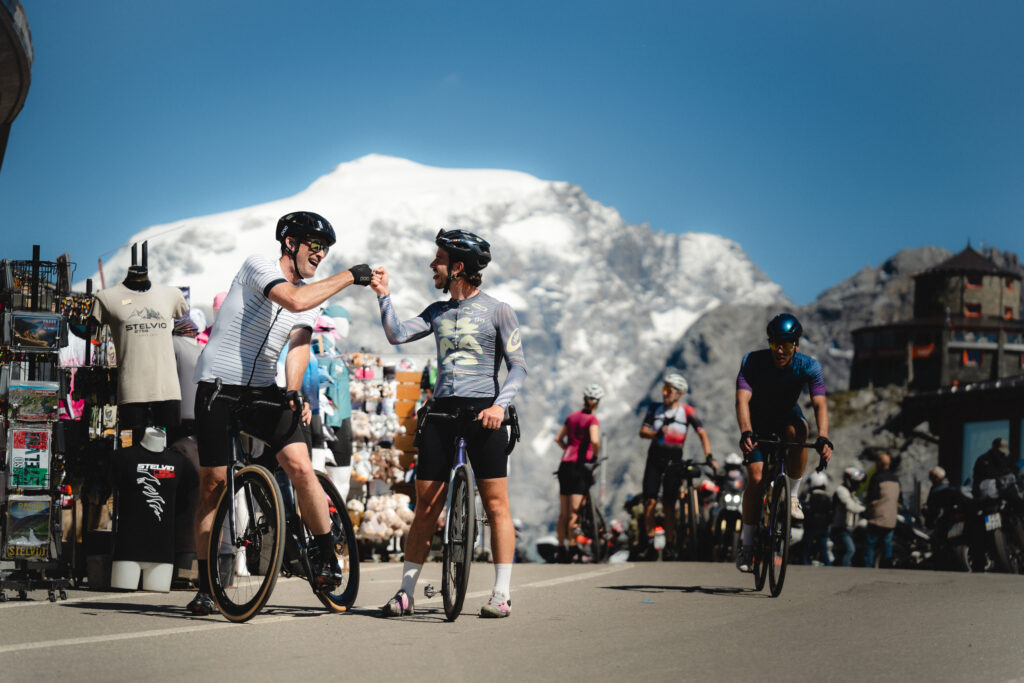
Yes,but don’t let that put you off.
The gradients are rarely extreme. What makes the Stelvio challenging is its length. Depending on your pace and which side you climb, you could spend two or three hours steadily going uphill.
Altitude also plays a role. Above 2,000 metres, the thinner air becomes noticeable, especially in the final kilometres when you already have a lot of climbing in your legs.
Our advice? Forget average speed and power numbers. Find a comfortable rhythm from the beginning, resist the temptation to follow faster riders and, most importantly, remember to look around. The views are a pretty good excuse to stop and catch your breath anyway.
And don’t rush it. Leave yourself plenty of time for photo stops, a cappuccino at the summit and a relaxed descent. The Stelvio is much better when you’re not watching the clock.
Things to know before you ride
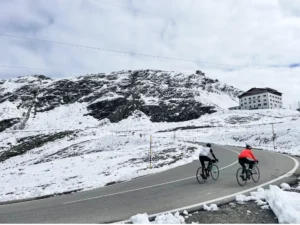
Be prepared for mountain weather. It can be hot and sunny at the bottom and close to freezing at the summit. We’ve experienced rain, hail and even snow on the Stelvio in the middle of summer, so always check the forecast and carry an extra layer. A lightweight jacket or vest, arm warmers and full-finger gloves can make a big difference, especially on the descent.
Start early. Cooler temperatures, quieter roads and beautiful morning light make an early start worth it. In peak summer, you’ll also avoid some of the traffic that builds up later in the day.
Choose an easy gear. Most recreational cyclists will appreciate having at least a 34×34 easiest gear, or equivalent. You may not need it for most of the climb, but after 20 kilometres of climbing you’ll be happy it’s there. Very few riders regret having an easier gear on the Stelvio.
Fuel before you need to. It’s easy to get caught up in the climb and forget to fuel. Drink often and don’t wait until it’s too late to realise you haven’t eaten enough.
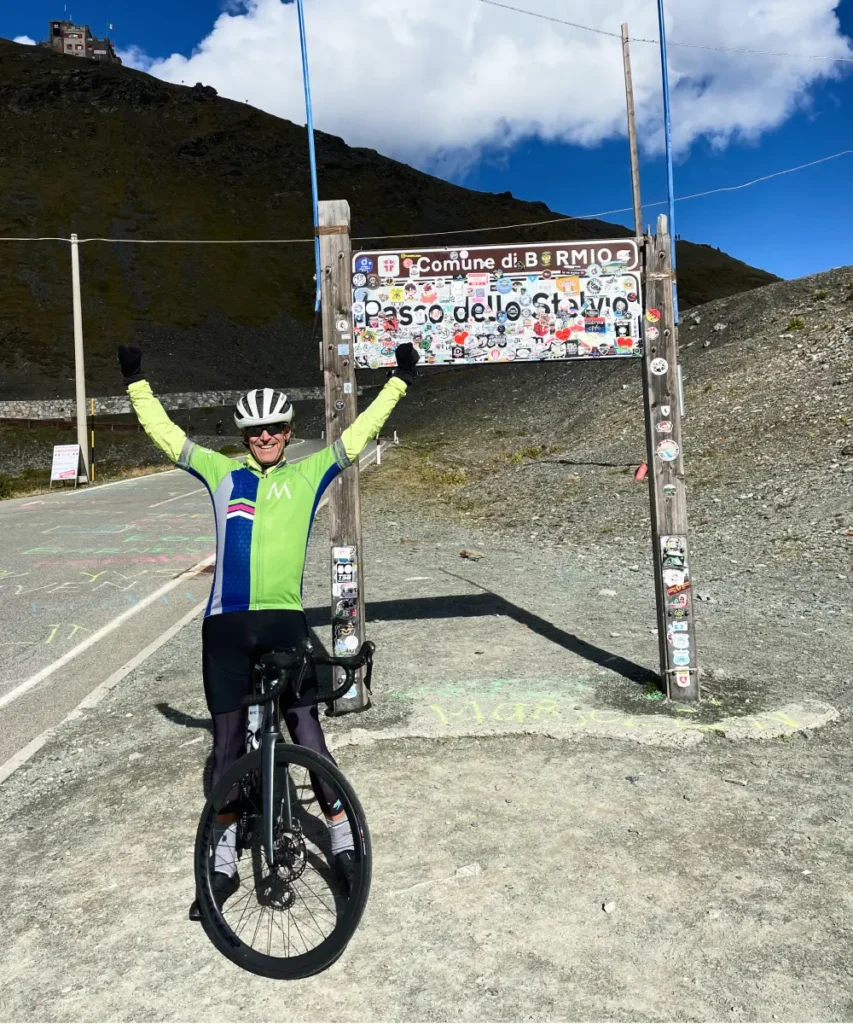
Take your time at the top. Get the obligatory photo with the Stelvio sign, grab a cappuccino, walk around and take it all in. You’ve earned it.
Don’t underestimate the descent. Put on your extra layers before leaving the summit and keep in mind that each side has its own tricky spots.
Towards Bormio, pay particular attention to the tunnels: you can arrive at speed and, for a few seconds after entering, visibility drops dramatically. On the Umbrail descent towards Santa Maria, the lower section is narrow, with tight bends and limited visibility. Towards Prato, some of the hairpins are very tight and buses or vans occasionally need most of the road to get around them.
Which side should you climb?
The Stelvio can be reached from three different sides: Bormio in Lombardy, Prato allo Stelvio in South Tyrol and Santa Maria Val Müstair in Switzerland.
Vago Cycling was born in Bormio, so we’ll admit we’re slightly biased. But there really isn’t a “best” side. Each one feels like a completely different climb.

Bormio
21.5 km · 1,533 m · Avg. 7.1% · 38 numbered hairpins
The climb starts straight out of town and quickly takes you into the mountains, through the forest and a series of short rock tunnels. About halfway up, the landscape opens completely and the road starts twisting across the mountainside through a long series of hairpins. At the Piana della Terza, the gradient eases for a while, so you can put the hammer down or give your legs a welcome break before the final kilometres to the summit.
Prato allo Stelvio
24.3 km · 1,808 m · Avg. 7.4% · 48 numbered hairpins
The most iconic side of the Stelvio starts quietly, with a long, almost monotonous stretch along the valley floor. Most of the famous hairpins are still to come.
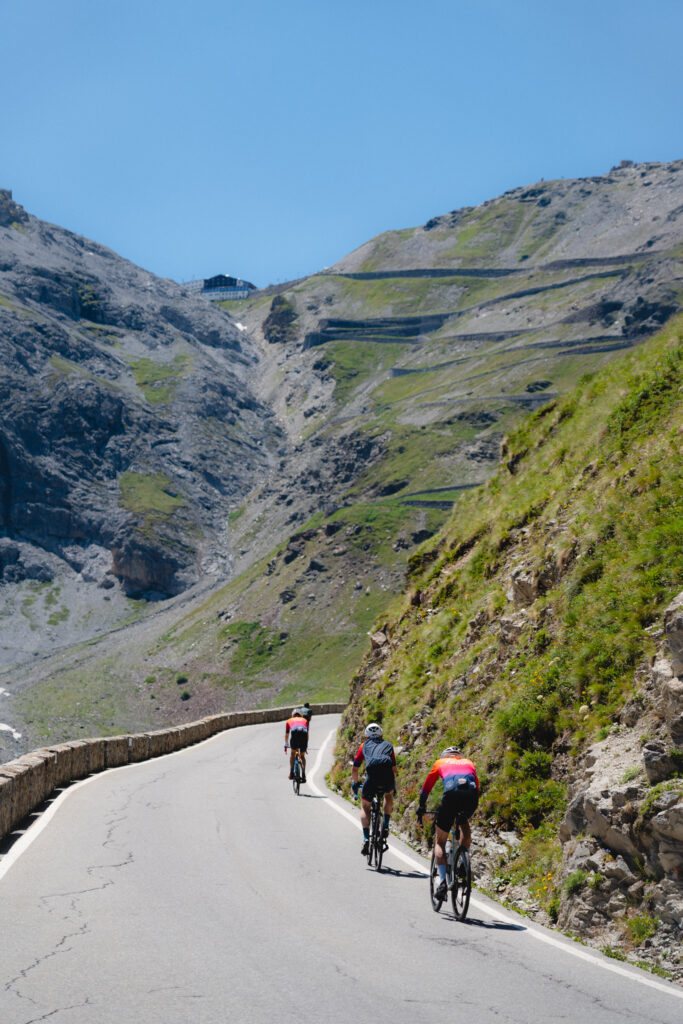
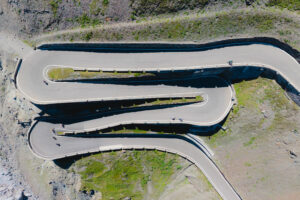
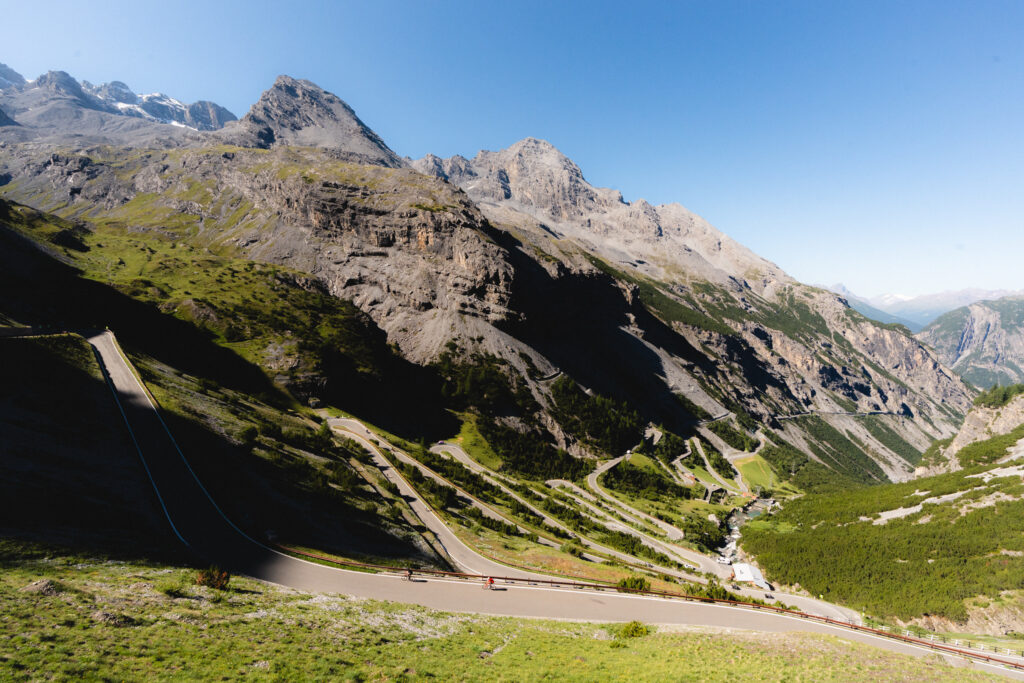
Once you enter the forest, the climb starts showing its teeth. Then, as you emerge above the trees, you finally see the classic Stelvio image: an endless series of switchbacks clinging to the mountainside and leading all the way to the summit.
If you ride with music, this is where we always tell our guests to switch to Stairway to Heaven by Led Zeppelin. We save Highway to Hell by AC/DC for the Mortirolo.
From here, the summit is almost always in sight, and that can be a double-edged sword. Some riders find it motivating. Others would rather not know how much climbing they still have ahead of them.
Umbrail Pass
16.5 km · 1,375 m · Avg. 8.3%
The Swiss side of the Stelvio starts in Santa Maria Val Müstair and climbs through a classic Swiss alpine landscape, with open pastures, wide views and very little traffic. There’s a sense of calm and nature that you simply don’t get on the busier sides of the Stelvio.
The road eventually joins the Bormio side with around 3 km to go to the summit of the Stelvio Pass.
Our favourite way to ride the Stelvio
If time and fitness allow, our favourite way to experience the Stelvio isn’t simply riding to the summit and back.
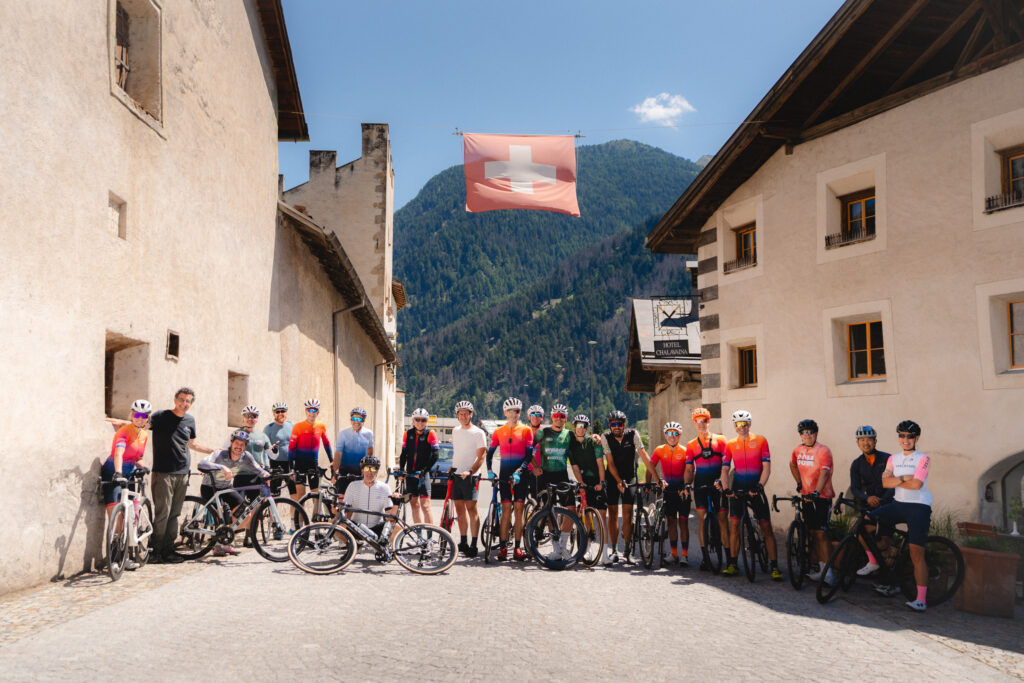
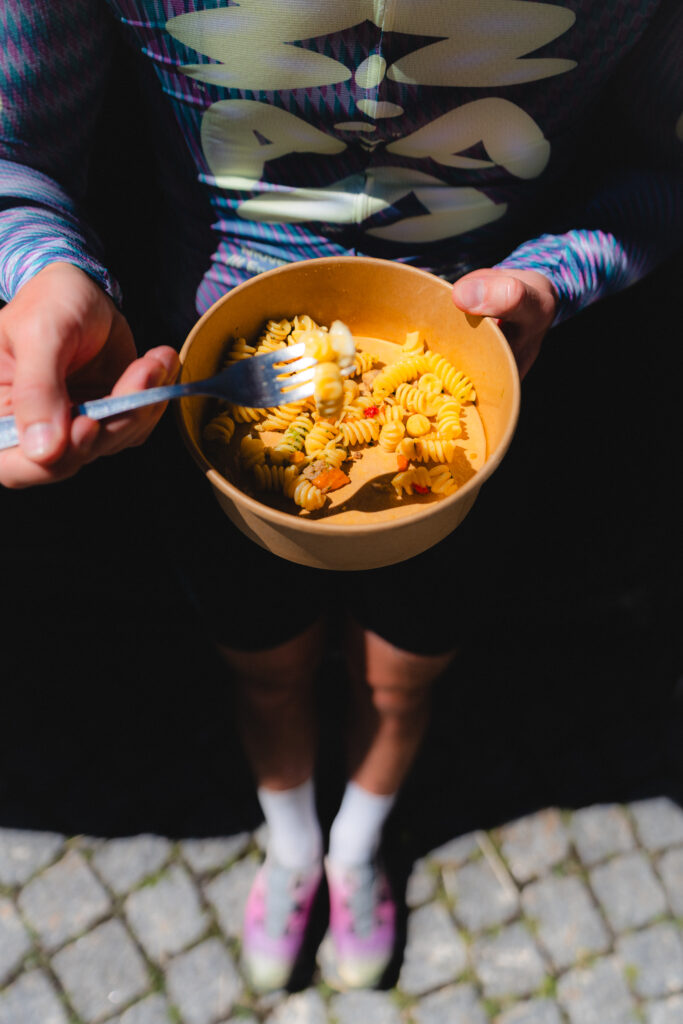
Starting from Bormio, we climb almost all the way to the Stelvio before turning onto the Umbrail Pass and descending into Switzerland. We stop for a picnic lunch in Santa Maria Val Müstair, then continue towards Prato allo Stelvio and climb back up from the iconic side, before enjoying the long descent home to Bormio.
It’s a big day: around 105 km (65 mi) with over 3,000 metres (10,000 ft) of climbing. You cross into Switzerland, experience all three sides of the Stelvio and climb it twice.
One of our guests once reached the top of the first climb and asked us: “Ah, we are doing it again?”
He had the route. He had the itinerary. The double Stelvio was definitely not a surprise. Somehow, he had just missed that little detail.
Yes. We were doing it again.
If you have the legs for it, this is the Stelvio ride we’d choose every time.
See the complete route: The Stelvio Loop →
Planning your stay
If you want to spend a few days riding the Stelvio and the surrounding climbs, Bormio makes an ideal base. The Stelvio starts directly from town, and other great rides like Gavia, Mortirolo and Cancano Lakes are right on your doorstep.
Where to stay: We’ve been working with Hotel La Genzianella for years and many of our guests stay there. It’s bike-friendly, family-run and very well set up for cyclists.
Where to rent a bike: Bormio Ski & Bike has a good selection of high-quality road bikes and is our go-to rental partner in Bormio.
Where to eat after the ride: You’ve earned it. One of our favourite post-Stelvio traditions is pizza and a cold beer at Pizzeria Umami.
Where to go next: Bormio also works really well as part of a longer cycling trip in Northern Italy. From here, you can continue west towards Lake Como or head east towards the Dolomites combining the Stelvio with some of the best riding in the Italian Alps.

Frequently asked questions
Can an amateur cyclist ride the Stelvio?
Yes. We’ve guided riders of very different abilities over the Stelvio, including many who had never ridden a climb this long before. You don’t need to be a racer, but you do need reasonable fitness, the right gearing and the patience to ride at your own pace.
How long does it take to climb the Stelvio?
For most recreational cyclists, expect somewhere between 1.5 and 3 hours, depending on the side, your fitness and how often you stop. Our advice is not to worry too much about the clock. This is one climb where stopping for photos is part of the experience.
Which side of the Stelvio is best to climb?
There isn’t one. Prato is the iconic side with the famous 48 hairpins, Bormio is more varied, while the Umbrail offers a quieter ride through Switzerland. If you have the legs, our favourite option is to combine all three in the Stelvio Loop.
When is the best time of year to ride the Stelvio?
Our favourite periods are June and September. June usually means snow still lining the upper sections of the road, while September tends to be quieter and cooler. July and August generally offer warmer weather, but also more traffic. In peak summer, we recommend starting early and avoiding weekends when possible.
Is the Stelvio Pass always open?
No. The Stelvio closes during winter and reopening depends entirely on snow conditions. It usually becomes rideable between late May and June and remains open into autumn, but dates vary every year. Always check the road status and weather forecast before setting off.
Ready to ride the Stelvio?
You can absolutely ride the Stelvio on your own. Thousands of cyclists do it every summer.
If you’d rather have someone take care of the route, bikes, food, mechanical support and the unpredictable mountain weather, that’s where we come in.
We’ve been riding these roads for years and we’d love to show you our backyard.


