
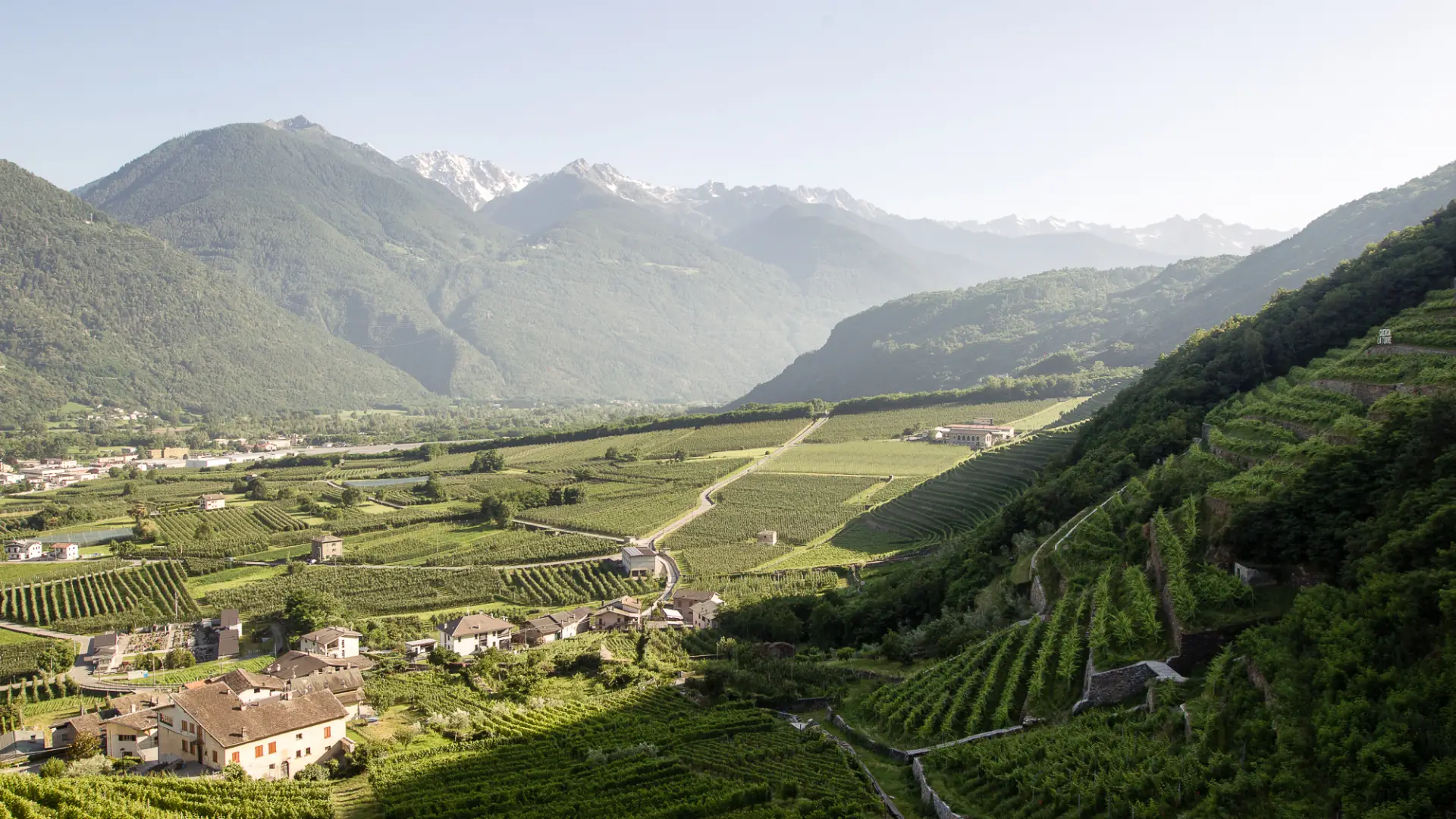
Riding in Valtellina is challenging. Making wine here? Even harder.
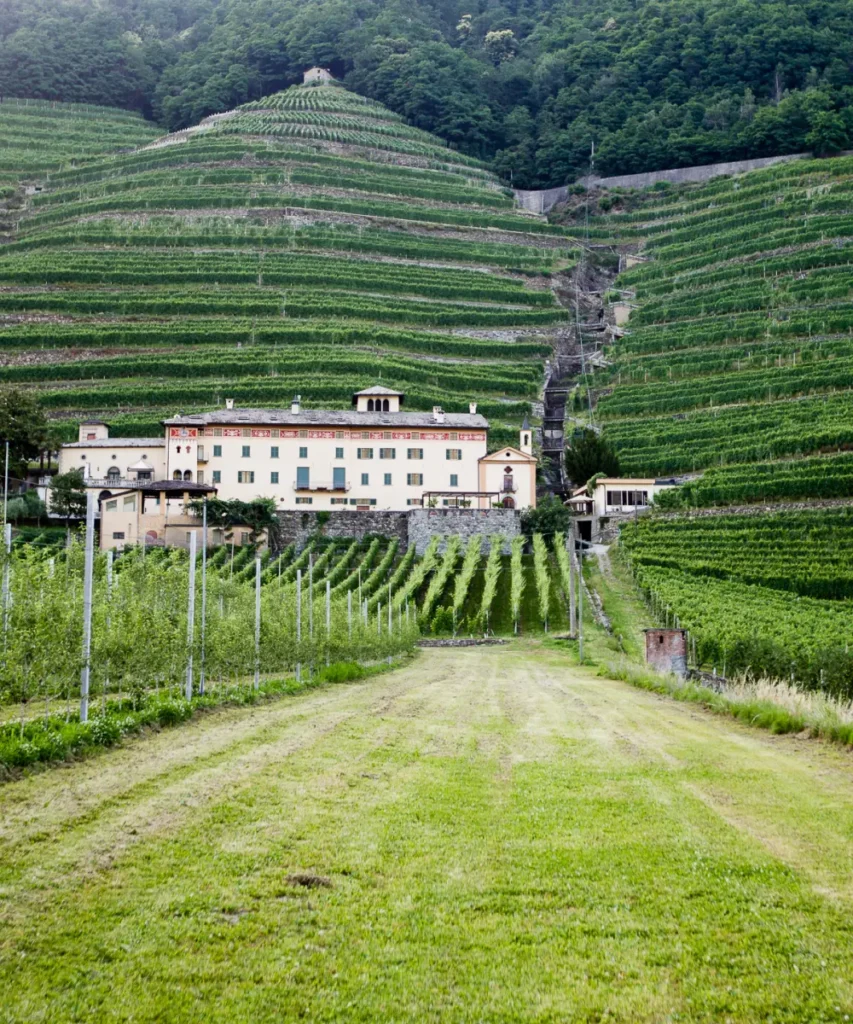
This is Italy’s largest terraced wine region, the realm of heroic viticulture.
On slopes that feel more like walls than fields, the vines cling to tiny, steep terraces that can only be worked by hand. These terraces are held together by dry-stone walls called muretti (little walls). Some date back to the Middle Ages, and if placed end to end, they would stretch over 1,500 miles.
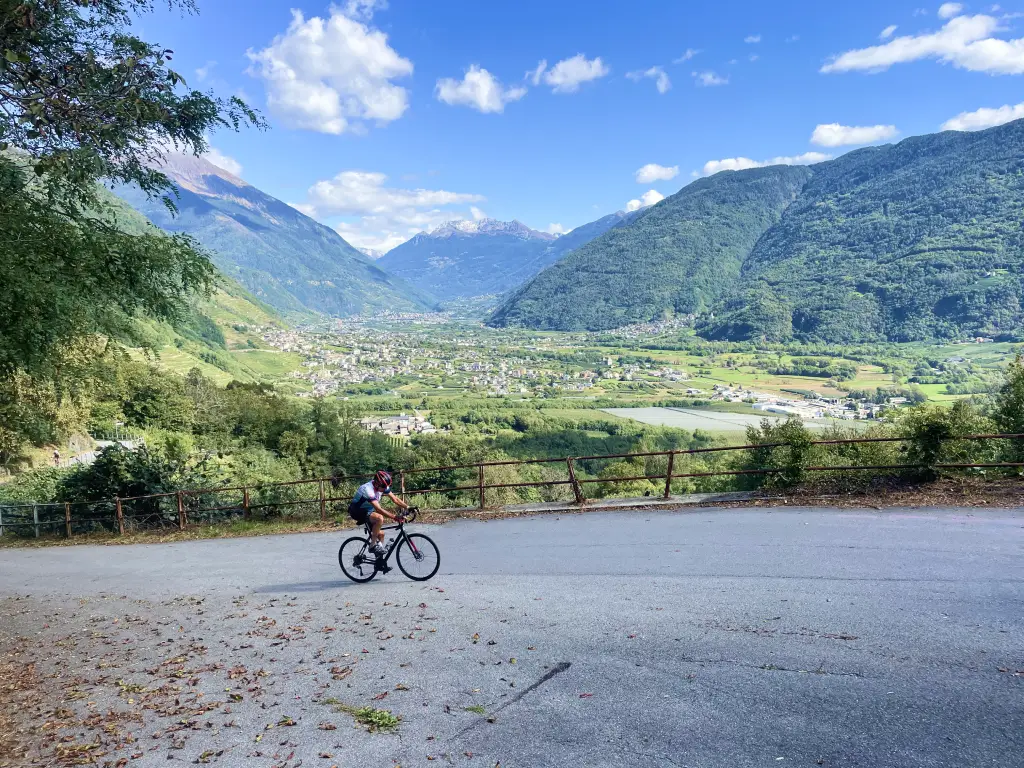
The grape grown here is Nebbiolo, locally known as Chiavennasca, the same grape used for Barolo in Piedmont.
But Alpine Nebbiolo is a world of its own. It is lighter, fresher, sharper, with altitude in its soul.
Warm, dry summers, wide temperature swings between day and night, and heat-retaining soils create an ideal balance of sugar, acidity, and ripeness.
The full-bodied and bold reds pair beautifully with the rich, hearty flavors of local dishes like sciatt and pizzoccheri and also with Nonna Lisa’s legendary tiramisu.
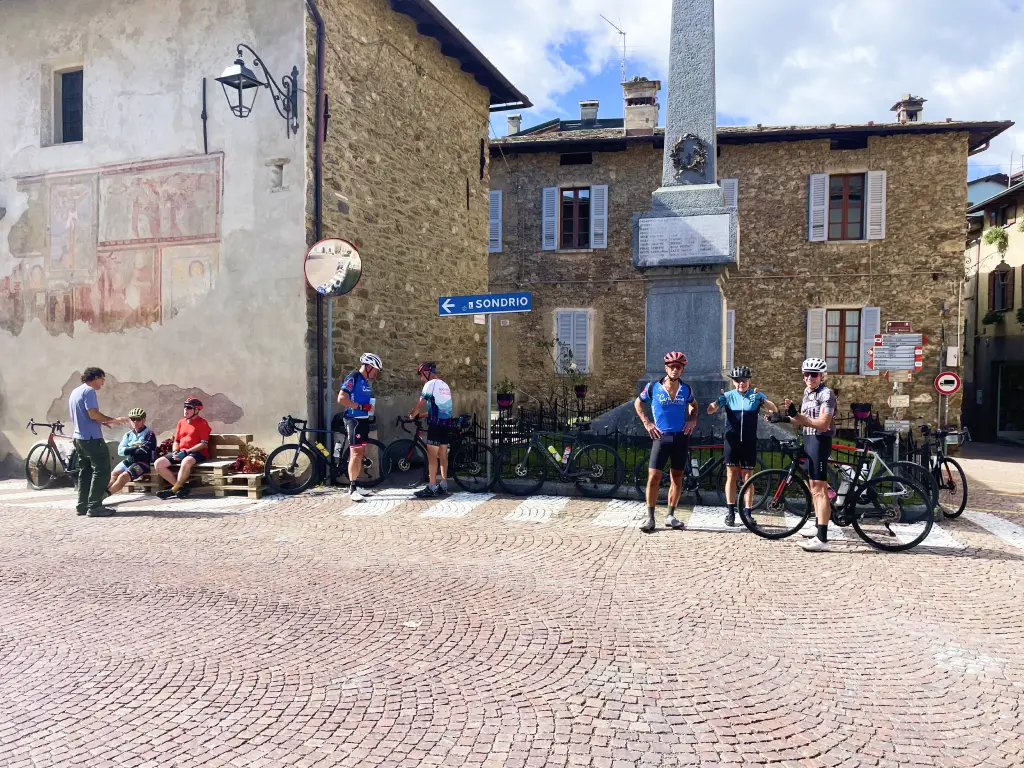
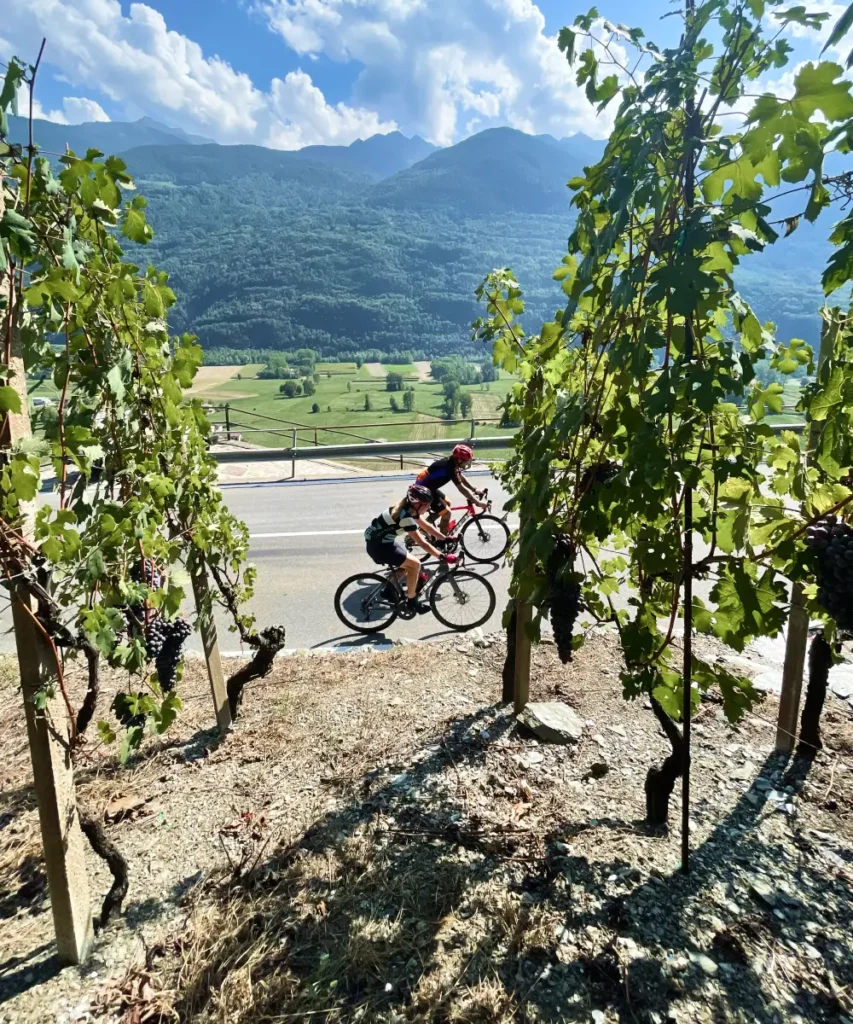
And they make the perfect end to a big day in the saddle. Cheers to the climbers, on the bike and in the vineyard!
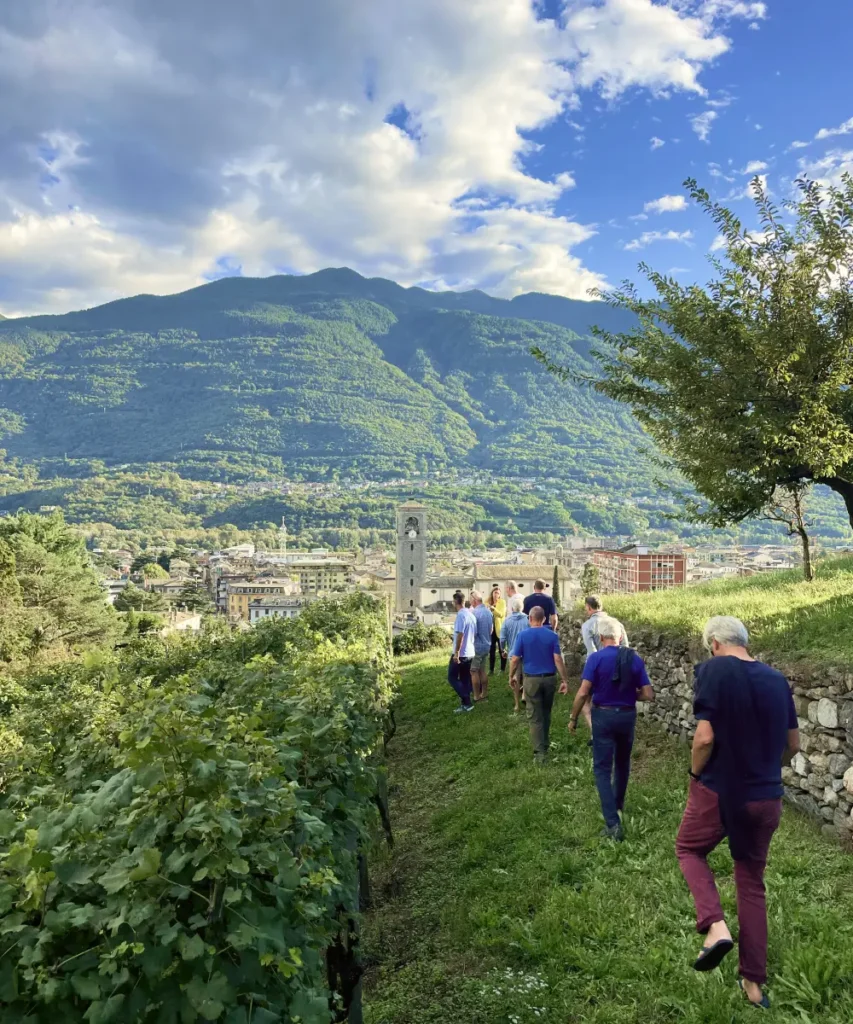
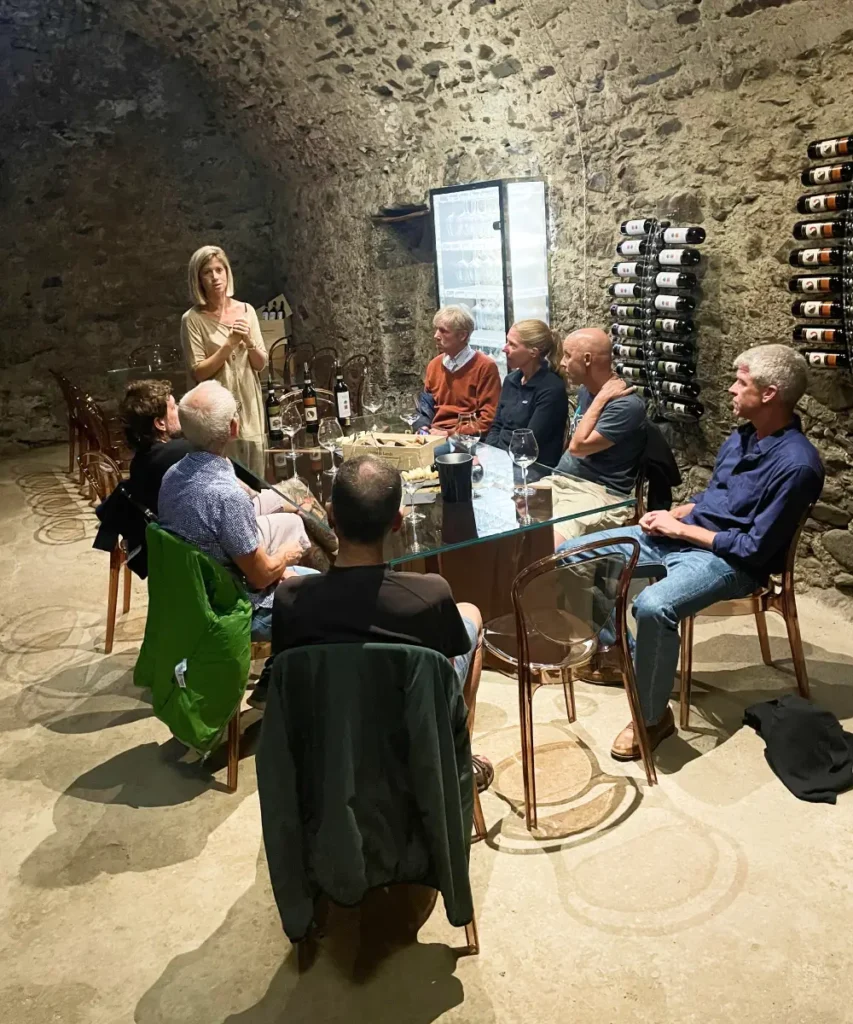
Did you know?
- Each hectare of vineyard requires up to 1,400 hours of manual work per year
- Sforzato (or Sfurzat) is the region’s most prestigious wine. It is made by partially drying Nebbiolo grapes for several weeks before fermentation, resulting in a powerful, concentrated red
- Some slopes are so steep they use cable systems, rails, or even helicopters to move the grape crates
- La Breva, a warm breeze from nearby Lake Como, helps pollination and reduces fungal disease.
Wish to ride and taste in Valtellina?
Check out our Stelvio to Lake Como Bike Tour.
Or if you’d like to learn more about wines in our destinations, take a look at our post about Prosecco.


